Immerse yourself in a revolutionary exploration of virtual reality‚ now enhanced with the often-overlooked sense of smell‚ promising richer‚ more realistic experiences for all users.
Virtual Reality (VR) has rapidly advanced‚ primarily focusing on visual and auditory immersion. However‚ a truly compelling experience necessitates engaging all human senses‚ and smell – often underestimated – plays a crucial role in memory‚ emotion‚ and perception of environments. Historically‚ VR development has considered olfaction secondary‚ but recent technological leaps are changing this paradigm.
The integration of smell into VR‚ often dubbed “Smell-o-Vision” or virtual scent‚ aims to bridge the gap between the digital and physical worlds. This isn’t merely about adding pleasant aromas; it’s about recreating the complex olfactory landscapes of virtual environments‚ from the subtle scent of pine in a forest to the acrid smell of smoke during a simulated emergency.
This guide explores the current state of virtual smell technology‚ its potential applications‚ and the challenges involved in creating realistic and impactful olfactory experiences within VR. We will delve into the technologies‚ the scent libraries‚ and the cognitive impacts of adding this often-forgotten sense to the virtual realm.
The Current State of VR Sensory Immersion
Currently‚ VR immersion largely relies on high-resolution visuals and spatial audio‚ creating convincing‚ yet incomplete‚ experiences. While advancements in haptic technology – primarily vibrotactile feedback – offer a sense of touch‚ it remains limited in replicating the nuances of real-world interactions. The majority of VR applications prioritize audiovisual content‚ often neglecting the significant impact of other senses.
However‚ a growing recognition of the importance of multi-sensory experiences is driving innovation. Researchers and developers are actively exploring ways to integrate taste‚ temperature‚ and‚ crucially‚ smell into VR environments. This shift acknowledges that human perception is holistic‚ and a truly immersive experience requires stimulating multiple senses simultaneously.
The recent focus on olfactory displays signifies a turning point. Though still in its early stages‚ the technology is progressing rapidly‚ moving beyond simple scent diffusion to more sophisticated methods of odor encoding and delivery‚ paving the way for more believable virtual worlds.
Why Add Smell to Virtual Reality?
The inclusion of smell in VR dramatically enhances presence – the feeling of “being there” – by triggering powerful emotional and cognitive responses. Olfactory stimuli are directly linked to the limbic system‚ responsible for memory and emotion‚ creating deeply impactful and memorable experiences. This surpasses the capabilities of visual and auditory cues alone.
Beyond entertainment‚ adding smell unlocks potential in diverse fields. Training and simulation benefit from realistic environmental cues‚ improving performance and retention. Therapeutic applications‚ such as exposure therapy‚ can be made more effective and comfortable. Furthermore‚ scent can aid in cognitive tasks and sensory analysis.
Ultimately‚ integrating smell completes the sensory picture‚ moving VR beyond a simulated visual and auditory experience to a truly immersive and believable reality. It addresses the current limitations of relying solely on sight and sound‚ offering a richer‚ more engaging‚ and impactful user experience.
The Technology Behind Virtual Smell
Virtual smell technology‚ often dubbed “Smell-o-Vision” in its conceptual stages‚ relies on generating and delivering scent stimuli to the user. This isn’t about recreating complex fragrances wholesale; it’s about encoding and digitally representing odors. Current approaches focus on combining a limited palette of base scents to simulate a wider range of smells.
The core challenge lies in accurately controlling and timing scent delivery. Systems utilize various methods‚ including micro-diffusion‚ atomization‚ and even thermal regulation to release precise amounts of odor molecules. These systems are then integrated with VR headsets or surrounding environments.
Recent advancements involve developing virtual sensory laboratories that mimic real-world sensory booths‚ allowing for controlled scent exposure and analysis. This facilitates research into human responses to olfactory stimuli within VR‚ paving the way for more sophisticated and realistic scent experiences.
Olfactory Display Technologies
Olfactory display technologies are the cornerstone of bringing smell to virtual reality‚ moving beyond purely visual and auditory immersion. These technologies aim to generate and deliver scent stimuli in a controlled and synchronized manner with the VR experience.
Current systems largely employ techniques like micro-diffusion‚ where tiny amounts of scent compounds are released into the air stream. Atomization‚ creating a fine mist of scented particles‚ is another common method. Thermal regulation‚ altering temperature to influence scent perception‚ is also being explored.
The development of digital scent representation is crucial. Researchers are working on “odor encoding‚” essentially creating a digital language for smells‚ allowing for precise control and combination of base scents to simulate complex aromas. This is vital for building comprehensive virtual scent libraries.
Scent Delivery Systems in VR
Effective scent delivery is paramount for a convincing virtual olfactory experience. Several approaches are being investigated‚ ranging from headset-integrated systems to external scent emitters strategically positioned within the VR environment.
Headset integration offers portability and synchronization‚ but faces challenges regarding miniaturization and preventing scent bleed-over between different aromas. External systems‚ like scent diffusers or fans‚ provide greater control over scent intensity and complexity‚ but require careful calibration to match the virtual scene.
A recent development involves mimicking real-world sensory booths‚ like those used in MATE (Maritime and Aviation Training Environment) studies‚ to create a controlled olfactory space. These systems aim to streamline scent identification and minimize human bias during sensory analysis within VR simulations.
Building a Virtual Scent Library
Creating a comprehensive virtual scent library is a significant undertaking‚ demanding a systematic approach to odor encoding and digital scent representation. This involves identifying‚ capturing‚ and digitally recreating a vast array of smells‚ from simple‚ pure aromas to complex‚ multi-faceted scents.
The process often relies on gas chromatography-mass spectrometry (GC-MS) to analyze the chemical composition of real-world odors. This data is then used to formulate digital scent profiles that can be reproduced by scent delivery systems. However‚ accurately translating chemical data into a perceivable scent remains a challenge.
Researchers are actively working to categorize and standardize scents‚ developing a “digital scent palette” that can be easily integrated into VR applications. The goal is to move beyond basic scents and create nuanced‚ realistic olfactory experiences‚ mirroring the complexity of the natural world.
Odor Encoding and Digital Scent Representation
The core of virtual smell technology lies in effectively encoding odors into a digital format. This isn’t simply about naming scents; it requires a precise representation of their chemical composition and perceptual qualities. Gas chromatography-mass spectrometry (GC-MS) plays a crucial role‚ breaking down scents into their constituent molecules.
However‚ translating this chemical data into a digital “scent code” is complex. Human perception of smell is subjective and influenced by factors beyond molecular composition. Researchers are exploring various methods‚ including algorithms that map chemical profiles to perceived scent attributes like intensity‚ pleasantness‚ and familiarity.

Ultimately‚ the aim is to create a standardized system where scents can be digitally stored‚ manipulated‚ and reproduced consistently across different VR platforms and scent delivery devices‚ enabling a truly immersive olfactory experience.
Challenges in Creating Realistic Virtual Scents
Replicating the complexity of real-world scents in virtual reality presents significant hurdles. Unlike visual or auditory stimuli‚ smell is intricately linked to memory and emotion‚ making accurate reproduction exceptionally difficult. Current technology struggles to capture the nuance and subtlety of natural odors.
Furthermore‚ individual differences in olfactory perception pose a challenge. What smells pleasant to one person might be neutral or even unpleasant to another. Achieving a universally convincing scent experience requires accounting for these variations.
Another limitation is the current scent palette. Existing systems can only reproduce a limited range of odors‚ hindering the creation of truly diverse and immersive virtual environments. Overcoming these challenges is crucial for unlocking the full potential of virtual smell technology.
Applications of Virtual Smell Technology
The potential applications of virtual smell extend far beyond mere entertainment. Imagine revolutionary training simulations where firefighters experience the acrid smell of smoke‚ or medical students learn to identify diseases through olfactory cues – enhancing realism and preparedness.
Education can also be transformed‚ allowing students to virtually explore historical environments and experience the scents of the past. Therapeutic applications are promising‚ potentially aiding in exposure therapy for phobias or providing comforting aromas for patients.
Moreover‚ virtual smell can revolutionize product design‚ enabling consumers to “experience” fragrances or flavors remotely. From gaming to healthcare‚ the integration of scent promises to unlock a new dimension of immersive and impactful experiences.
Virtual Scent in Entertainment and Gaming
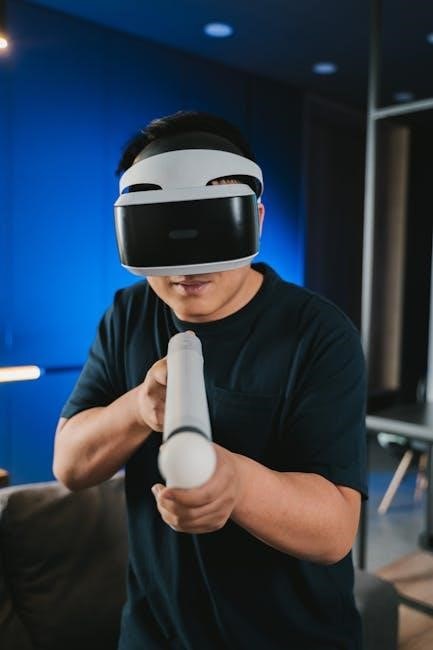
Imagine stepping into a virtual world and not only seeing a dragon‚ but also smelling its sulfurous breath – a truly immersive gaming experience! Virtual scent technology promises to revolutionize entertainment‚ adding a new layer of realism to games‚ movies‚ and virtual tourism.
Developers can create more engaging narratives by incorporating scents that evoke emotions and memories. Picture exploring a virtual forest and smelling the pine needles and damp earth‚ or visiting a virtual bakery and inhaling the aroma of freshly baked bread.
This technology extends beyond gaming; concerts and live events could be enhanced with corresponding scents‚ creating a multi-sensory spectacle. The possibilities are endless‚ offering a richer‚ more captivating form of entertainment for users worldwide.
Training and Simulation with Olfactory Feedback
Virtual smell technology offers significant advancements in training and simulation‚ particularly in fields where scent is a critical component of real-world scenarios. Firefighter training‚ for example‚ can be dramatically improved by incorporating the smell of smoke‚ allowing for more realistic hazard recognition and response.
Similarly‚ medical simulations can benefit from olfactory feedback‚ enabling trainees to identify various medical conditions based on scent – a skill crucial for accurate diagnosis. Hazmat training can also be enhanced‚ preparing personnel for identifying dangerous chemical leaks through smell.
By integrating scent into these simulations‚ trainees develop a more comprehensive understanding of the environment and improve their decision-making skills‚ ultimately leading to increased safety and effectiveness in real-world situations.
Therapeutic Applications of Virtual Smell
The potential of virtual smell extends beyond entertainment‚ offering promising therapeutic applications for a range of conditions. Aromatherapy‚ traditionally used for relaxation and mood enhancement‚ can be delivered virtually‚ providing controlled and customizable scent experiences for patients.
Virtual reality environments infused with specific scents can aid in exposure therapy for phobias‚ allowing individuals to confront their fears in a safe and controlled setting. Furthermore‚ scent-based VR can assist in memory recall for patients with cognitive impairments‚ triggering associated memories and emotions.
Researchers are exploring the use of virtual smell to alleviate symptoms of anxiety and depression‚ and even to manage chronic pain‚ demonstrating the powerful connection between scent‚ emotion‚ and well-being.
Cognitive and Psychological Impacts of Virtual Smell
The integration of smell into virtual reality significantly impacts cognitive processes and psychological responses. Olfactory stimuli are directly linked to the amygdala and hippocampus‚ brain regions crucial for emotional processing and memory formation‚ leading to more immersive and impactful experiences.
Studies demonstrate that virtual scents can enhance memory recall‚ improve spatial awareness‚ and influence decision-making processes within VR environments. Capturing cognitive‚ physiological‚ psychological‚ and emotional human responses is vital to understanding these effects.
Furthermore‚ scent association plays a key role; familiar scents can evoke strong emotional responses‚ while novel scents can heighten attention and curiosity. This opens avenues for manipulating user experience and influencing behavior within virtual settings‚ offering exciting possibilities for research and application.
Human Responses to Olfactory Stimuli in VR
Research indicates that humans exhibit multifaceted responses to olfactory stimuli within virtual reality environments. Physiological reactions‚ such as changes in heart rate and skin conductance‚ are observed alongside cognitive shifts in attention and memory. Psychological effects include altered perceptions of presence and realism.
Emotional responses are particularly pronounced‚ with scents triggering both conscious and subconscious feelings. The direct link between smell and the limbic system explains this powerful connection‚ influencing mood and behavior within the virtual space.
Studies involving participants – like the sixty MATE students – reveal that scent can reduce bias in sensory analysis and streamline scent identification. Understanding these nuanced human responses is crucial for designing effective and engaging virtual scent experiences.

Emotional Responses and Scent Association
The profound connection between scent and emotion stems from the direct pathway to the limbic system‚ the brain region governing feelings and memories. Virtual reality‚ augmented by smell‚ powerfully leverages this link‚ evoking strong emotional responses in users.
Scent association plays a critical role; familiar odors trigger specific memories and feelings‚ enhancing the sense of presence and immersion. A virtual campfire‚ complete with a smoky scent‚ can elicit feelings of warmth and nostalgia‚ while other scents may induce fear or excitement.
Researchers are actively capturing cognitive‚ psychological‚ and emotional human responses to these stimuli‚ revealing how virtual smells influence behavior and perception. This understanding is vital for crafting impactful experiences in entertainment‚ training‚ and therapeutic applications.
Virtual Sensory Laboratories and Research
Advancements in virtual reality are fostering the development of virtual sensory laboratories‚ designed to mimic real-world sensory booths like those used at MATE (Maritime and Aerospace Training Enterprise). These labs provide controlled environments for studying human responses to olfactory stimuli.
Recent studies involving sixty MATE students demonstrate the potential of this approach‚ offering a streamlined method for scent identification and reducing human bias in sensory analysis. By manipulating both scent and the visual environment within VR‚ researchers can investigate how context influences perception.
This methodology represents a fresh approach to sensory analysis‚ where exposure and scent are dynamically linked to the virtual surroundings. Such labs are crucial for understanding the cognitive and physiological impacts of virtual smell technology and refining its applications.
Mimicking Real-World Sensory Booths
The creation of virtual sensory laboratories directly aims to replicate the functionality of established sensory booths‚ such as those utilized by MATE (Maritime and Aerospace Training Enterprise). These physical booths offer precise control over environmental factors‚ including scent presentation‚ for rigorous sensory evaluation.
Virtual environments allow for a cost-effective and scalable alternative‚ removing the logistical constraints of physical spaces. Researchers can digitally recreate booth conditions‚ manipulating variables like lighting‚ sound‚ and‚ crucially‚ olfactory stimuli with greater flexibility.
This digital mirroring enables standardized testing across diverse locations and participant groups. By accurately simulating real-world booths within VR‚ scientists can gain valuable insights into human perception and refine virtual scent delivery systems for optimal realism and impact.
Streamlining Scent Identification with VR
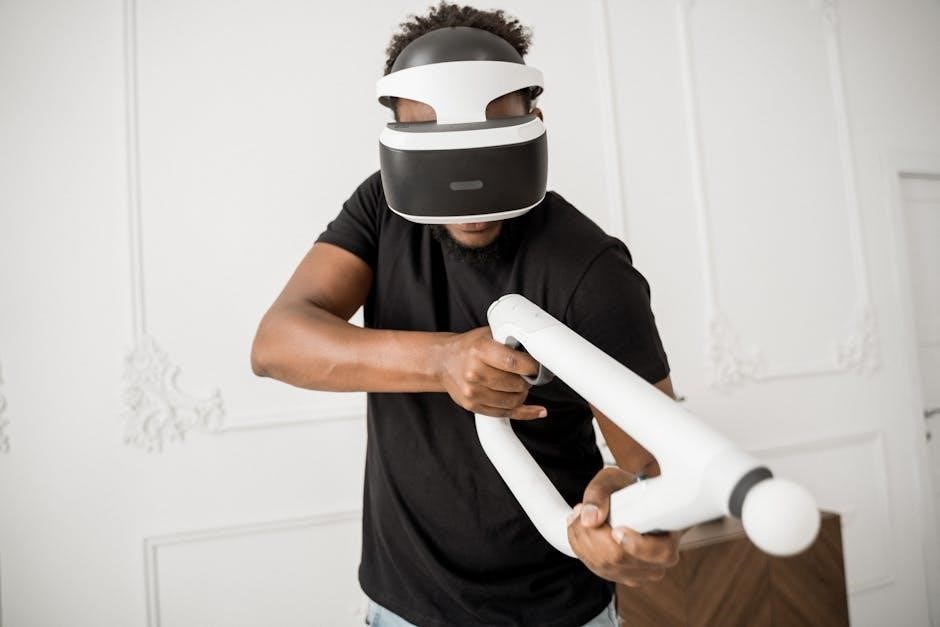
Virtual Reality presents a novel methodology for scent identification‚ offering a significant advantage over traditional sensory analysis techniques. By integrating scent presentation with controlled visual and auditory cues‚ VR minimizes potential biases inherent in human perception.
The environment or imagery within the virtual space can directly influence scent perception and identification accuracy. This controlled influence allows researchers to isolate the impact of specific contextual factors on olfactory processing‚ leading to more reliable results.
Furthermore‚ VR facilitates the standardization of scent exposure‚ ensuring all participants experience the same olfactory stimulus under identical conditions. This approach streamlines the identification process and enhances the objectivity of sensory evaluations‚ ultimately improving the efficiency of scent analysis.
Future Trends in Virtual Smell Technology
The trajectory of virtual smell technology points towards a fascinating convergence with other sensory modalities‚ particularly haptics – the science of touch. Imagine experiencing the warmth of a virtual dragon’s breath alongside the scent of sulfurous smoke‚ creating truly immersive and believable scenarios.
Beyond simple scent delivery‚ the future promises dynamic smell experiences‚ adapting in real-time to user actions and environmental changes within the virtual world. This responsiveness will unlock new levels of realism and engagement.
Addressing current limitations‚ such as expanding the available scent palette and refining odor encoding techniques‚ is crucial. Continued innovation will lead to more nuanced and accurate virtual olfactory representations‚ ultimately revolutionizing entertainment‚ training‚ and therapeutic applications.
Integration with Haptics and Other Senses
The true potential of virtual smell lies not in isolation‚ but in its synergistic integration with other sensory inputs. Combining olfactory stimuli with haptic feedback – the sense of touch – promises remarkably realistic experiences‚ moving beyond visual and auditory immersion.
Envision feeling a cool breeze while smelling the salt of the ocean‚ or experiencing the texture of rough bark alongside the earthy aroma of a forest. This multi-sensory approach dramatically enhances presence and believability within virtual environments.
Further integration with visual and auditory cues will create holistic sensory experiences‚ triggering stronger emotional responses and deeper cognitive engagement. The future of VR hinges on seamlessly blending these senses‚ offering users truly unforgettable and impactful virtual journeys.
The Potential of Dynamic Smell Experiences
Beyond static scent delivery‚ the future of virtual smell lies in dynamic experiences – scents that change and evolve in real-time‚ responding to user actions and environmental shifts within the virtual world.
Imagine a virtual cooking simulation where aromas intensify as food cooks‚ or a mystery game where scents provide clues to unravel the plot. Workplace simulations could benefit from dynamic smells‚ recreating realistic environments for training purposes.
This level of interactivity requires sophisticated odor encoding and delivery systems capable of rapidly switching between scents and adjusting their intensity. The ability to create nuanced and responsive olfactory landscapes will unlock entirely new dimensions of immersion and engagement‚ transforming VR from a visual medium into a truly multi-sensory experience.
Addressing Limitations and Expanding the Scent Palette
Currently‚ virtual smell technology faces limitations in replicating the vast complexity of real-world odors. The available scent palette is restricted‚ and accurately reproducing subtle nuances remains a significant challenge.
Future development hinges on expanding this palette through advancements in chemical synthesis and odor encapsulation techniques. Research into odor coding and perception is crucial for creating more realistic and convincing virtual scents.
Furthermore‚ overcoming technical hurdles in scent delivery – such as latency and scent bleed-over – is essential. Integrating virtual smell with other sensory modalities‚ like haptics‚ will also enhance the overall immersive experience‚ creating a more holistic and believable virtual environment for users to explore.