
Honda provides a comprehensive 2016 Civic owner’s manual, detailing operation, maintenance, and safety features; PDF versions are readily available online for convenient access.
This manual serves as a vital resource, offering instructions and guidance for all 2016 model owners, ensuring optimal vehicle performance and longevity.
Overview of the Manual’s Purpose
The 2016 Honda Civic owner’s manual is meticulously designed to familiarize drivers with their vehicle’s features, controls, and capabilities. It’s a crucial guide for safe and efficient operation, covering everything from basic driving instructions to detailed explanations of advanced technologies.
This manual details essential maintenance schedules, fluid checks, and troubleshooting tips, empowering owners to proactively care for their Civic. It also provides vital safety information regarding the airbag system, ABS, and VSA. Furthermore, it explains the audio and navigation systems, if equipped, and outlines emergency procedures. Ultimately, the manual aims to enhance the ownership experience and ensure responsible vehicle use.
Where to Find a Digital Copy (PDF)
Digital copies of the 2016 Honda Civic owner’s manual in PDF format are widely accessible online. Websites like CARMANS.NET and various Honda resource pages offer free downloads. A United States edition, encompassing 636 pages and 26.9 MB, is readily available for the 2016 Civic Sedan.
Searching online for “Honda Civic 2016 owner’s manual PDF” will yield numerous results. Some sources also provide navigation manuals specifically for equipped models. These PDF versions allow convenient access on computers, tablets, or smartphones, eliminating the need to carry a physical copy. Ensure the PDF is from a reputable source for accuracy.
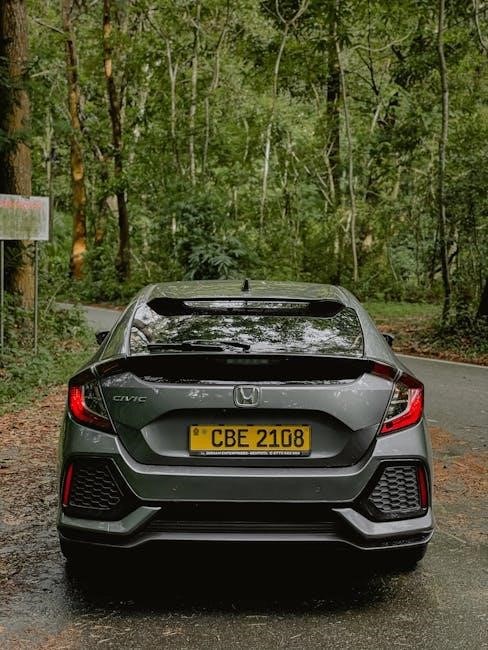
Understanding Your Vehicle
Honda Civic 2016 owners should familiarize themselves with the vehicle’s unique identifiers, like the VIN, and understand key and remote control functionalities.
Vehicle Identification Number (VIN) Location
Locating your 2016 Honda Civic’s Vehicle Identification Number (VIN) is crucial for various reasons, including vehicle history reports, warranty claims, and potential theft recovery. The VIN is a unique 17-character code specific to your vehicle.
On the 2016 Civic, you can find the VIN in several places. Primarily, it’s located on a metal plate affixed to the driver’s side dashboard, visible through the windshield. Additionally, the VIN is printed on the vehicle registration and insurance documents. It may also appear on the driver’s side doorjamb.
Always verify the VIN on multiple sources to ensure accuracy, especially when purchasing a used vehicle or dealing with service records. Knowing your VIN is a fundamental aspect of vehicle ownership.

Key and Remote Control Operation
Your 2016 Honda Civic’s key and remote control offer a range of functions for convenient vehicle access and operation. The physical key unlocks doors and starts the ignition. The remote control, often featuring a keyless entry system, allows locking/unlocking doors and activating the panic alarm from a distance.
The remote may also include buttons for the trunk release and, on some trims, remote engine start. Battery replacement is essential for continued remote functionality. Refer to the owner’s manual for specific battery type and replacement procedures.
Proper key and remote operation ensures security and ease of use. Familiarize yourself with all features and limitations outlined in the manual to maximize convenience and prevent accidental activation.
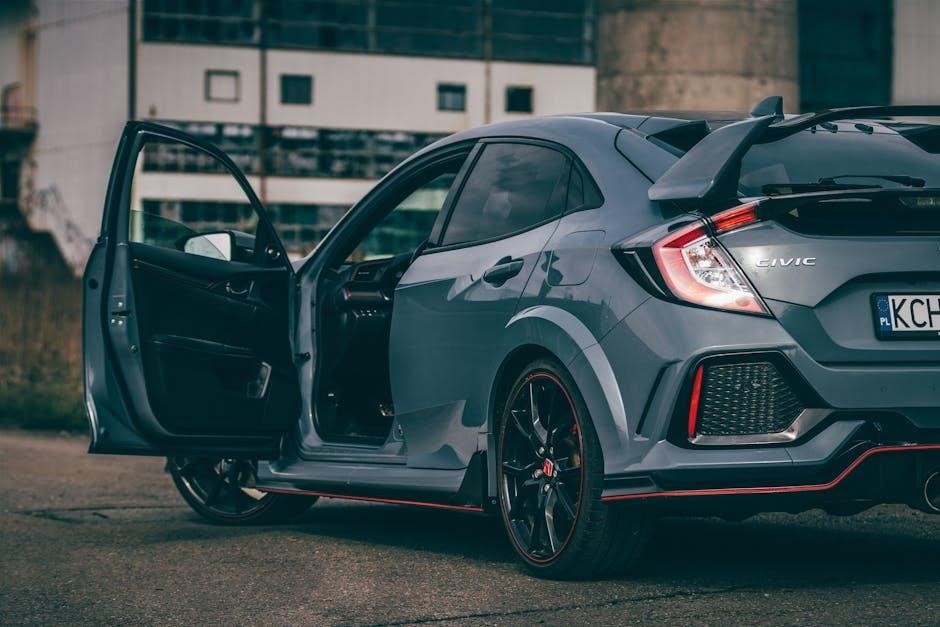
Operating Your 2016 Honda Civic
This section details essential driving procedures, including starting, stopping, and utilizing both manual and automatic transmissions, alongside proper fueling techniques for your 2016 Civic.
Starting and Stopping the Engine
To start your 2016 Honda Civic, ensure the parking brake is engaged and the transmission is in Park (for automatic) or Neutral (for manual). Insert the key or press the start/stop button while firmly depressing the brake pedal. The engine will ignite, and the dashboard indicators will illuminate.
Stopping the engine involves bringing the vehicle to a complete halt, shifting into Park (automatic) or Neutral (manual), and then turning the ignition key to the “Lock” position or pressing the start/stop button. Always ensure the parking brake is applied before exiting the vehicle. Refer to the owner’s manual for detailed safety precautions and specific instructions related to your vehicle’s features.
Proper engine operation is crucial for longevity and performance.
Driving with a Manual Transmission
Operating a 2016 Honda Civic with a manual transmission requires coordinating the clutch pedal, gear selector, and accelerator. Depress the clutch fully before shifting gears. Select the desired gear, and smoothly release the clutch while simultaneously applying pressure to the accelerator.
Avoid stalling by maintaining a balance between clutch release and accelerator input. Downshift before slowing down or climbing hills to maintain engine power. The owner’s manual provides detailed guidance on proper shifting techniques and avoiding jerky movements. Mastering these skills ensures a smooth and enjoyable driving experience.
Practice makes perfect with manual transmissions.
Automatic Transmission Operation
The 2016 Honda Civic’s automatic transmission simplifies driving. Select a gear by moving the shift lever – options typically include Park (P), Reverse (R), Neutral (N), and Drive (D). For optimal fuel efficiency, maintain a consistent speed. The ‘D’ position automatically selects the appropriate gear ratio.
For increased engine braking or specific driving conditions, utilize lower gear selections like ‘2’ or ‘L’. The owner’s manual details these options. Avoid shifting while moving at high speeds. Regular transmission fluid checks, as outlined in the maintenance schedule, are crucial for longevity.
Enjoy the convenience of automatic driving!
Fueling Your Vehicle
Your 2016 Honda Civic requires unleaded gasoline with an octane rating of 87 or higher. The fuel filler door is located on the driver’s side. Ensure the engine is off before refueling. Carefully remove the fuel cap and insert the nozzle fully into the filler neck.
Avoid overfilling the tank; stop when the automatic shut-off engages. Replace the fuel cap securely to prevent fuel vapor emissions. Refer to the owner’s manual for fuel tank capacity specifications. Using the correct fuel grade is vital for optimal engine performance and longevity.
Always practice safe refueling procedures!

Maintenance Essentials
The 2016 Honda Civic owner’s manual details a recommended maintenance schedule, covering fluid checks (oil, coolant, brake fluid), tire care, and essential service intervals.
Recommended Maintenance Schedule
The 2016 Honda Civic’s maintenance schedule, as outlined in the owner’s manual, is crucial for preserving vehicle reliability and performance. Regular inspections and servicing are categorized by mileage intervals. Key services include oil and filter changes, tire rotations, and fluid level checks.
The manual specifies intervals for inspecting belts, hoses, and brakes, alongside more extensive services like spark plug replacement and coolant flushing. Following this schedule helps prevent unexpected repairs and maintains the vehicle’s warranty. Adhering to these guidelines ensures optimal fuel efficiency and a safer driving experience for 2016 Civic owners.
Detailed information regarding specific maintenance tasks and associated costs can be found within the comprehensive owner’s manual documentation.
Checking Fluid Levels (Oil, Coolant, Brake Fluid)
The 2016 Honda Civic owner’s manual emphasizes the importance of regularly checking fluid levels. For oil, locate the dipstick, wipe it clean, reinsert fully, and then check the level – it should fall between the minimum and maximum marks. Coolant levels are assessed via the reservoir; never open the radiator cap when the engine is hot.
Brake fluid should be checked at the master cylinder reservoir, ensuring it’s at the ‘MAX’ line. Low fluid levels may indicate a leak. The manual provides diagrams illustrating the locations of each reservoir. Consistent monitoring of these fluids is vital for preventing damage and ensuring safe operation of your 2016 Civic.
Tire Pressure and Maintenance
The 2016 Honda Civic owner’s manual stresses maintaining proper tire pressure for optimal handling, fuel efficiency, and tire life. Recommended pressure, found on the driver’s side doorjamb, differs from the maximum pressure listed on the tire sidewall. Regularly check pressure with a gauge when tires are cold.
The manual also details tire rotation procedures – typically every 5,000 miles – to promote even wear. Inspect tires for damage, uneven wear patterns, and sufficient tread depth. Proper tire maintenance contributes significantly to vehicle safety and performance, extending the lifespan of your 2016 Civic’s tires.

Safety Features and Operation
The 2016 Honda Civic owner’s manual thoroughly explains safety systems like airbags, ABS, and VSA, detailing their operation and importance for driver and passenger protection.
Airbag System Information
The 2016 Honda Civic’s airbag system is a crucial safety component, detailed extensively within the owner’s manual. It provides vital information regarding the front, side, and side curtain airbags, explaining their deployment characteristics in various collision scenarios.
Honda emphasizes the importance of proper seatbelt usage, as airbags are designed to work in conjunction with seatbelts, not as replacements. The manual also outlines potential risks associated with airbag deployment, particularly for children, and stresses the need to follow all safety precautions.
Furthermore, it details the system’s indicators and what actions to take if a malfunction is detected, ensuring owners understand how to maintain optimal airbag functionality and safety.
Anti-lock Braking System (ABS)
The 2016 Honda Civic features an Anti-lock Braking System (ABS) designed to enhance braking performance and maintain steering control during hard braking or on slippery surfaces, as thoroughly explained in the owner’s manual.
The manual details how ABS works – preventing wheel lockup – and what drivers should expect to feel: a pulsating sensation in the brake pedal. It stresses the importance of maintaining firm, continuous pressure on the brake pedal during ABS activation, resisting the urge to pump the brakes.
Understanding ABS operation is crucial for safe driving; the manual also covers the ABS indicator light and what it signifies, ensuring owners are aware of any potential system issues.
Vehicle Stability Assist (VSA)
The 2016 Honda Civic’s Vehicle Stability Assist (VSA) system, detailed in the owner’s manual, enhances stability by detecting and mitigating skidding. It works by selectively applying brakes to individual wheels and adjusting engine power.
The manual explains that VSA isn’t a substitute for careful driving, but a supplemental safety feature. Drivers will notice a VSA indicator light illuminating when the system is actively working to maintain control.
It’s crucial to understand VSA’s limitations, as outlined in the manual; it cannot correct for all driving conditions. The manual also clarifies when VSA may be temporarily disabled and the implications of doing so.

In-Car Technology
The 2016 Honda Civic owner’s manual details the audio system’s operation and, if equipped, provides a comprehensive navigation system guide for users.
Audio System Operation
The 2016 Honda Civic’s audio system, as detailed in the owner’s manual, offers a range of features for an enhanced driving experience. Users can explore AM/FM radio, CD playback, and auxiliary input options.
The manual provides clear instructions on adjusting volume, tuning stations, and managing audio sources. Bluetooth connectivity allows for wireless music streaming and hands-free calling. The system’s interface is explained, covering display settings and menu navigation.
Furthermore, the owner’s manual outlines how to utilize the audio system’s advanced features, such as USB connectivity for compatible devices and potential smartphone integration. Troubleshooting tips are also included for common audio-related issues.
Navigation System Guide (if equipped)
The 2016 Honda Civic’s navigation system, when equipped, is thoroughly explained within the owner’s manual. It details map display options, destination input methods, and route calculation procedures.
The manual guides users through setting preferences, such as voice guidance and route avoidance options. It also covers points of interest (POI) searching and utilizing real-time traffic updates for optimized routing.
Furthermore, the owner’s manual provides instructions on system updates, troubleshooting common issues, and understanding map data limitations. It clarifies how to utilize the navigation system’s features for a seamless and informed driving experience, ensuring efficient travel.

Troubleshooting and Emergency Procedures
The 2016 Honda Civic owner’s manual details emergency actions and basic troubleshooting, offering guidance for roadside assistance and unexpected vehicle issues.
What to Do in an Emergency
The 2016 Honda Civic owner’s manual provides crucial guidance for various emergency scenarios. It details procedures for roadside assistance, including jump-starting a dead battery and changing a flat tire, emphasizing safety precautions throughout.
The manual also outlines steps to take in the event of a collision, stressing the importance of checking for injuries and contacting emergency services. Information regarding hazard lights, proper positioning of warning devices, and securing the vehicle is clearly explained.
Furthermore, it covers actions to take if the vehicle becomes disabled, advising drivers to pull over to a safe location and activate hazard lights. The manual emphasizes the importance of remaining calm and following established safety protocols to minimize risk during any emergency situation.
Basic Troubleshooting Tips
The 2016 Honda Civic owner’s manual offers helpful troubleshooting advice for common issues. It guides owners through diagnosing minor problems, such as a non-starting engine, often suggesting checks of the battery, fuel level, and ignition system.
The manual also provides guidance on addressing issues with lights, wipers, and the audio system, often starting with simple solutions like checking fuses. It emphasizes the importance of consulting a qualified technician for complex repairs.
Furthermore, it details how to identify warning lights on the dashboard and their potential meanings, encouraging prompt attention to avoid more significant problems. The manual aims to empower owners with basic diagnostic skills, promoting preventative maintenance and responsible vehicle care.

Specifications
The 2016 Honda Civic owner’s manual details engine specs, dimensions, and capacities, providing crucial technical data for informed vehicle understanding and maintenance.
Engine Specifications
The 2016 Honda Civic offered several engine options, meticulously detailed within the owner’s manual. The standard engine was a 2.0-liter inline-4, producing 158 horsepower and 138 lb-ft of torque.
An available turbocharged 1.5-liter inline-4 delivered increased performance, generating 174 horsepower and 177 lb-ft of torque. Both engines utilized i-VTEC valve control for optimized efficiency.
The manual specifies fuel requirements, typically unleaded gasoline with an octane rating of 87 or higher. Detailed information regarding compression ratios, bore and stroke dimensions, and engine displacement are also included, providing a comprehensive overview for owners and technicians alike.
Dimensions and Capacities
The 2016 Honda Civic owner’s manual outlines crucial dimensional and capacity data. The sedan boasts a length of 182.3 inches, a width of 73.0 inches, and a height of 56.5 inches. Wheelbase measures 105.7 inches, contributing to a stable ride.
Interior space is detailed, including passenger volume of 99.1 cubic feet for the sedan. Trunk capacity reaches 15.1 cubic feet, offering ample cargo room. Fluid capacities are also specified: engine oil (3.7 quarts), coolant (approximately 1.76 gallons), and fuel tank capacity (12.39 gallons).
These specifications aid in maintenance and understanding the vehicle’s physical characteristics.